 1
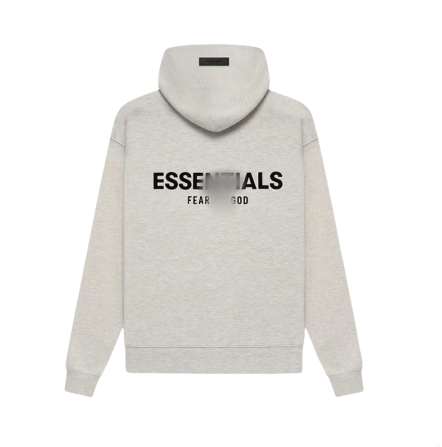
1Cozy hoodie
¥185
No community reviews yet Unproven evidenceThis is the only part of a submission nobody else can write
- Materials
- Heavyweight Cotton
- Ship weight
- 333 g
- Marketplace
- Weidian
- Saved by
- 2 people
Down fill power, wool weight and layering that actually works. This is also the most freight-expensive list on Lantern, so here is how to keep the shipping bill sane.
China makes most of the world's down jackets, and the cluster around Changshu in Jiangsu is where a large share of them are filled and sewn. That proximity is why the numbers on a marketplace listing are usually specific: fill power stated as 600, 700 or 800, fill weight given separately in grams, and a down-to-feather ratio such as 90/10. Fill power measures loft (how much warmth you get per gram), while fill weight tells you how much is actually in the garment. A jacket with 800 fill power and only 90g of down is a shoulder-season piece, not a winter one.
Wool works on a different scale and the number to look for is areal weight in grams per square metre. A wool-blend overcoat around 450 to 550g/m² is a city coat for a mild winter; 600 to 800g/m² melton is genuine cold-weather cloth and hangs with real structure. The wool percentage matters as much as the weight: above 70 percent behaves like wool, below 50 percent behaves like polyester with a nice hand. For knitwear, gauge is the equivalent shorthand: 3GG is chunky and windproof-ish under a shell, 12GG is fine and made for layering.
Three things to check before ordering. First, the shell denier on anything down-filled: 20D nylon is light and packable but snags, 40D ripstop is the sensible everyday compromise, and anything at 75D or above is heavy for the warmth it carries. Second, baffle construction: box-baffle holds loft where stitch-through creates cold lines, and the difference is visible in the product photos. Third, size against your actual layering plan, because a coat that fits over a tee will not close over a 3GG knit. Order the measurement table one layer up.
The unavoidable problem with this category is freight. The median piece on this list weighs about 640g and half a dozen of them run past a kilogram, up to 2.2kg for a full-length lined coat. At roughly ¥42 per kilogram to Western Europe, ¥48 to North America and ¥52 to Oceania, a genuine winter order of four pieces at 4.8kg costs ¥200 to ¥250 in line-haul alone. The common mistake is ordering winter clothing in November, when both the warmth and the shipping rates are at their worst. Buy in late summer and ship once.
Ordered on quality score, review depth and link health. Every entry says why it is here, including when the reason is simply that it is the cheapest thing on the list that still holds up.
1This is the only part of a submission nobody else can write
 2
2su-perbuy full storefront pull (Superbuy Spreadsheet). 1 option row(s), source USD 33.75 at fixed test rate 7.2
 3
3One of the cheapest picks here at ¥152.
su-perbuy full storefront pull (Superbuy Spreadsheet). 1 option row(s), source USD 21.11 at fixed test rate 7.2
 4
4su-perbuy full storefront pull (Superbuy Spreadsheet). 1 option row(s), source USD 29.86 at fixed test rate 7.2
 5
5The most expensive option on this list at ¥580, and the reviews justify it.
su-perbuy full storefront pull (Superbuy Spreadsheet). 1 option row(s), source USD 80.55 at fixed test rate 7.2
 6
6One of the cheapest picks here at ¥180.
su-perbuy full storefront pull (Superbuy Spreadsheet). 1 option row(s), source USD 25.00 at fixed test rate 7.2
 7
7su-perbuy full storefront pull (Superbuy Spreadsheet). 1 option row(s), source USD 27.77 at fixed test rate 7.2
 8
8One of the cheapest picks here at ¥175.
su-perbuy full storefront pull (Superbuy Spreadsheet). 1 option row(s), source USD 24.30 at fixed test rate 7.2
 9
9The most expensive option on this list at ¥438, and the reviews justify it.
su-perbuy full storefront pull (Superbuy Spreadsheet). 1 option row(s), source USD 60.90 at fixed test rate 7.2
 10
10One of the cheapest picks here at ¥167.
su-perbuy full storefront pull (Superbuy Spreadsheet). 1 option row(s), source USD 23.19 at fixed test rate 7.2
 11
11The most expensive option on this list at ¥630, and the reviews justify it.
su-perbuy full storefront pull (Superbuy Spreadsheet). 1 option row(s), source USD 87.50 at fixed test rate 7.2
 12
12su-perbuy full storefront pull (Superbuy Spreadsheet). 1 option row(s), source USD 44.30 at fixed test rate 7.2
 13
13su-perbuy full storefront pull (Superbuy Spreadsheet). 1 option row(s), source USD 33.19 at fixed test rate 7.2
 14
14su-perbuy full storefront pull (Superbuy Spreadsheet). 1 option row(s), source USD 27.22 at fixed test rate 7.2
 15
15One of the cheapest picks here at ¥130.
su-perbuy full storefront pull (Superbuy Spreadsheet). 1 option row(s), source USD 18.00 at fixed test rate 7.2
 16
16su-perbuy full storefront pull (Superbuy Spreadsheet). 1 option row(s), source USD 32.22 at fixed test rate 7.2
 17
17The most expensive option on this list at ¥415, and the reviews justify it.
su-perbuy full storefront pull (Superbuy Spreadsheet). 1 option row(s), source USD 57.70 at fixed test rate 7.2
 18
18su-perbuy full storefront pull (Superbuy Spreadsheet). 1 option row(s), source USD 52.50 at fixed test rate 7.2
 19
19su-perbuy full storefront pull (Superbuy Spreadsheet). 1 option row(s), source USD 31.90 at fixed test rate 7.2
 20
20One of the cheapest picks here at ¥185.
su-perbuy full storefront pull (Superbuy Spreadsheet). 1 option row(s), source USD 25.69 at fixed test rate 7.2
 21
21su-perbuy full storefront pull (Superbuy Spreadsheet). 1 option row(s), source USD 36.10 at fixed test rate 7.2
 22
22su-perbuy full storefront pull (Superbuy Spreadsheet). 1 option row(s), source USD 36.11 at fixed test rate 7.2
 23
23su-perbuy full storefront pull (Superbuy Spreadsheet). 1 option row(s), source USD 33.19 at fixed test rate 7.2
 24
24One of the cheapest picks here at ¥138.
su-perbuy full storefront pull (Superbuy Spreadsheet). 1 option row(s), source USD 19.16 at fixed test rate 7.2
 25
25su-perbuy full storefront pull (Superbuy Spreadsheet). 1 option row(s), source USD 51.11 at fixed test rate 7.2
 26
26The most expensive option on this list at ¥480, and the reviews justify it.
su-perbuy full storefront pull (Superbuy Spreadsheet). 1 option row(s), source USD 66.60 at fixed test rate 7.2
Priced as one consolidated parcel to Western Europe: ¥1,375 of goods at 4.1 kg. Change your region on any product page.
¥1,375 goods + ¥177 fees & freight · 6-15 days
Cheapest total and 4.1/5 reliability: the clear pick for this parcel.
¥1,375 goods + ¥186 fees & freight · 6-14 days
Quickest realistic delivery to Western Europe at 6-14 days.
¥1,375 goods + ¥192 fees & freight · 6-15 days
¥15 above the cheapest option. Fastest warehouse check-in.
Estimates. Totals are estimates calculated by Lantern from each agent's published fee structure and our own per-region freight table. Actual charges depend on final weight, dimensions, declared value, route and customs. Always confirm in the agent's own cart before paying.
Size winter pieces around what goes underneath them. Take your chest measurement wearing the thickest mid-layer you actually own, add four to six centimetres of ease for a coat, and match that against the flat measurement table. Sleeve length is the one people get wrong: Chinese outerwear patterns often run two to three centimetres short in the sleeve relative to the chest, which is invisible on a hanger and obvious in a cold wind. Knitwear is the safe place to size up; a fitted wool coat is not.
On freight, be deliberate. A single down jacket at 1.4kg costs about ¥59 of line-haul to Western Europe plus handling, which is fine; four coats at once is a ¥250 shipping bill, which is not. The efficient pattern is one heavy anchor piece per parcel, padded out with light items (knitwear, shirts, accessories) that ride along cheaply per kilogram. Ask your purchasing agent about compression or vacuum packing for down, which routinely cuts a puffer's volumetric weight and can matter if your route prices on dimensional weight. Free warehouse storage runs 45 to 180 days depending on the agent, so accumulating a winter order through the autumn and shipping once in a single 5kg parcel is both cheaper and simpler.
Spend more on down fill power and wool percentage, because those two numbers are the entire performance of the garment and cannot be compensated for elsewhere. Spend less on shells, fleece mid-layers and beanies, where ¥100 buys most of what ¥400 buys. The honest caveat: warmth is the hardest thing to verify before a parcel arrives, and it is the one thing you find out about at the worst possible moment. Read the review count on each pick before the photos, and if you are buying for a genuinely cold climate rather than a damp mild one, prioritise the pieces with the deepest review history over the ones that look best.
The things people email the guide desk about, answered without the marketing gloss.
Fill power measures the loft of down (how many cubic inches one ounce occupies), so higher means more warmth per gram. For everyday winter use, 600 to 700 fill power is more than adequate and considerably cheaper than 800. Crucially, check the fill weight in grams as well: a 700 fill power jacket with 150g of down is far warmer than an 800 fill power one with 80g.
This is the heaviest apparel category. Knitwear runs 400 to 700g, a down jacket 900g to 1.5kg, and a full-length lined wool coat 1.6 to 2.2kg. At baseline line-haul rates of about ¥42 per kilogram to Western Europe, ¥48 to North America and ¥52 to Oceania, plus ¥18 to ¥26 of handling, a four-piece winter parcel at around 4.8kg lands somewhere between ¥220 and ¥280 in shipping.
Put one heavy anchor piece in a parcel and fill the rest with light items rather than shipping coats together. Ask your purchasing agent about compression or vacuum packing for down-filled garments, which reduces volume on routes that price by dimensional weight. Use the free storage window (45 to 180 days depending on the agent) to accumulate an order rather than shipping each purchase separately and paying handling every time.
It depends on two numbers rather than the word wool. Look for a cloth weight of 600g/m² or more and a wool content above 70 percent for genuinely cold conditions; a 450g/m² blend at 40 percent wool is a mild-city coat. Wool also handles damp cold better than down does, while down wins comfortably in dry cold below freezing.
Late summer or early autumn. Domestic delivery to your agent takes two to five days and international line-haul is 7 to 16 days for most regions, but warehouse processing slows noticeably from October onward as demand peaks. Ordering in August or September also means the pieces are in stock in the sizes and colourways you want, rather than whatever is left in November.
For most climates, yes. A fine 12GG merino base under a 3GG knit under a 40D shell adapts to a wider temperature range than a single heavy jacket, and each layer packs smaller for travel. The exception is sustained dry cold below about minus ten, where a properly filled down parka with box-baffle construction does something layers cannot.
Same job, not quite the same evidence: usually thinner review counts rather than worse products. Several of these will qualify next time the list rebuilds.
The adjacent lists: narrower budgets, neighbouring categories, or the same catalogue from a different angle.
Thirty-six pieces across streetwear and the wider wardrobe: what to buy first, what to read in a measurement table, and what a full parcel really costs to land.
The quieter half of the catalogue: knitwear, tailoring, denim and dresses judged on cut and cloth rather than on logos. Thirty pieces, menswear and womenswear.
Fabric weight decides everything in this category. Thirty pieces from 220gsm tees to 480gsm loopback hoodies, ranked on what buyers kept rather than what the listing claimed.
Linen shirting, mesh layers, shorts and 160g tees. Warm-weather clothing is also the cheapest thing to ship: a five-piece summer parcel lands for less than one winter coat.
Every category page carries its own filters, ranked rails and community evidence, useful when you want the whole shelf rather than the edited five.
Each tag is its own ranked page across the whole catalogue, not just these picks.
107 live listings met this guide's selection rule; the top 26 are shown. Ranking weights quality score, review depth and link health above raw popularity, and rebuilds whenever the underlying evidence moves.
We index marketplace listings and link you to purchasing agents who buy on your behalf. Where an agent pays us a referral fee it is disclosed, and it only ever breaks a tie. How we make money.
Ratings here come from people who received the parcel. Each pick's page carries warehouse QC photos and owner shots next to the seller's own images. Browse the QC archive.